MAC student Libby Hunter’s van Gogh studies

Copying masters’ works has been practised over the centuries. Before the Louvre was opened for public viewing, it was an unofficial artist retreat, offering artists the freedom work on site, recreating masterpieces. Henri IV offered studio and living quarters to artists, where they were free to create in their chosen medium (from painting to sculpture).

Copying masters’ works is both an educational and meaningful exercise in understanding brushstroke, texture, tone, colour, and becoming intimately involved with a work of art.

Libby Hunter, who attends Marco’s Studio Art Class, has been generous enough to share with us her experience of copying Vincent van Gogh’s work.

Libby Hunter, Sunflowers, after van Gogh, oil on canvas, 2018

I started Marco’s Friday morning art class one year ago. It was my first introduction to painting having only dabbled a bit at school. After six months of Marco teaching the basics of drawing and painting in oils, I decided I wanted to focus on an impressionist artist to get a greater understanding of technique, colour and brushwork. I decided on van Gogh. I have always admired his work, and after the recent exhibition at NGV – which just blew me away! – I thought exploring his techniques would teach me a lot – with Marco’s help of course!

The thing that struck me the most when viewing so many of van Gogh’s works at the NGV was just how vivid his colour was; nothing like the many art history books I’ve collected. And many of the artworks I had never seen before; they were just incredible. I wanted to learn how he achieved such vibrant colour and movement in his work. He also expresses such intense feelings in his painting, which are often quite melancholy; his work really makes me feel something. I think this is what attracts me most to his work.

Libby Hunter, Vase with Cornflower and Poppies, after Vincent van Gogh, oil on canvas, 2018

Much of van Gogh’s technique is about colour and brushwork and the mix of the two. His brushstrokes are intense, bold, confident, and they create an energy and an impact in his work that is not easy for a novice to re-create. I am still working on this and I expect I could be chasing it for some time. I have discovered the process of copying a great artist is not an easy one.

Marco provided a constant guiding hand through the process but also gave me enough space to find your own way. I really enjoyed analysing books and prints of van Gogh’s work alongside Marco, with us trying to determine exactly what technique he used. It is such a puzzle and a really interesting way to discover and learn painting techniques. I am working on my very first self-portrait now, in van Gogh’s style. A very daunting task, but I am loving the process and hopefully, it will make me a much-improved painter.

Written by Libby Hunter – artists and MAC student

Caspar David Friedrich, The Sea of Ice

Caspar David Friedrich, The Sea of Ice, oil on canvas, 1823-24

Last Tuesday, Melbourne was recorded as being the most freezing city on earth at 6am, which is one reason why I thought it would be poignant to look at Friedrich’s work, The Sea of Ice.

German-born Caspar David Friedrich was a nineteenth-century Romantic landscape painter, and alongside other Romantic painters, he helped position landscape painting as a major genre within Western art. In his generation, he was a significant painter, and like so many artists, his work gained recognition after his death in 1840.

Landscapes have a magical quality of being able to convey the artists’ feelings of pain, love and suffering just as powerfully as figurative work, or prose. Looking past the connection we can make with the temperature of this work and wintery Melbourne mornings, Friedrich believed that the harshness of nature could console the sorrow of the human condition. When contemplating the violent collision of the ice sheets in his work, it takes us out of ourselves and moves us beyond our own problems in life, reducing our sense of personal persecution, rendering us insignificant in the natural world, much like the tiny toppled ship in the mass of broken ice. Many of Friedrich’s stark, beautiful landscapes give us access to a state of mind where we are acutely aware of the largeness of space and helps us reframe our sadness.

Art collector Johann Gottlob von Quandt commissioned The Sea of Ice, however, its composition was deemed too radical and the painting was sold after Friedrich’s death.

Written by Lauren Ottaway

Getting the attention of your crush in 1908

As February is the month of love, we thought it would be appropriate to feature one of the most romantic and sensual paintings in history – The Kiss (Lovers), by Gustav Klimt.

Before Klimt’s gold period (during which The Kiss was painted), Klimt painted for the State, with his work being hugely acclaimed by officialdom. These works were academic and traditional in style. One of his most famous earlier works is the ceiling painting in the Burgtheater in Vienna. Measuring 7.5m by 4m, this incredible work depicts the Greek theatre in Taormina. Everything in this painting is meticulously described and observed; the majestic building forms the backdrop to the foreground where a woman is performing. Klimt, in partnership with his brother Ernst and their friend Franz Match (eventually disbanded), decorated theatres throughout the Austro-Hungarian Empire, and much of their work can still be seen today.

Theater in Taormina, Gustav Klimt, oil on marble, 1886-8

In his 30s he was cast out as a rebel after the scandal surrounding his paintings for the University of Vienna; large-scale ceiling paintings including motifs of Medicine, Jurisprudence, and Philosophy. Klimt did not adhere to his conservative-historical painting style and was asked repeatedly to rework the paintings. He liked to quote the poet, Friedrich Von Schiller (1759-1805), “If you cannot please everyone through your actions or your artwork, then please the few. To please the multitude is bad.”  Unfortunately, together with many other works by Klimt, the paintings were destroyed in a fire set by the retreating German army during the last days of war.

During this period, Klimt’s reputation transformed and his artistic person reinvented. He became the first President of the Vienna Succession, also known as the Union of Austrian Artists, with a vision to end the the distinctions in considering some art to be superior to others.

Kilmt travelled to Ravenna in 1903 and saw the Byzantine mosaics in the Basilica of San Vital for the first time. Witnessing the rich, vivid mosaics and the power of their beauty was a turning point in Klimt’s art practice, and saw the creation of The Kiss.

It has been speculated that this masterpiece had a personal agenda for the artist. It is claimed that the woman featured is Emilie Floge, fashion entrepreneur, long-time friend of Klimt’s and his sister-in-law. A sketchbook was discovered in 1917 containing preparatory sketches of The Kiss, with “Emilie” written in big letters beside them. There was controversy surrounding the platonic nature of their relationship, as Klimt kept his personal life out of the public eye. When he collapsed, suffering a stroke (which led to his death) in 1918, his first words were “Fetch Midi” (his name for Emily).

This incredibly beautiful painting, at 180cm x 180cm, shows their intense love transporting them into their own world, oblivious of their surroundings. The woman, beautiful, serene and passive, like most women in Klimt’s work, softly touches the hand that is embracing her so lovingly. This painting is unlike his many erotic drawings and paintings of couples; the embrace is much more loving than overtly sensual.

The Kiss (Lovers), Gustav Klimt, oil and gold leaf on canvas, 1907–1908


Written by Lauren Ottaway

Dawn Csutoros – Back in Beijing

As part of my 9-month art journey this year, I am spending the first month in China.

My link with China began 30 odd years ago when I started learning tai chi and looking into Daoism. But it had never really crossed my mind to travel there. Then in 2007, I received a commission for the JW Marriott Hotel, Beijing. I followed this up with a six-week artist residency in Fei Jia Cun, an art village on the outskirts of Beijing. The artist villages in China are amazing! Imagine a community made up predominantly of artists, the studios generally take up the ground floor of a two storey space, bedroom traditionally upstairs. Kitchen, bathroom and studio downstairs. The atmosphere is supportive, with neighbouring artists visiting each other, discussing ideas for their work and meeting for drinks and openings.  The energy is at once open and enthusiastic; a genuine curiosity to explore new mediums and different techniques.

Dawn group pic
Group picture with Brian Wallace, Director of Red Gate Gallery, Nikolaus Ellrodt, Curator and Director of The Showroom Gallery, Dawn Csutoros, artist, local international artists, Geoff Raby.

2008 came with an invitation to exhibit at the Australian Embassy in Bejing, opened by the acting Ambassador Dr Geoff Raby and Bill Shorten. 2009/10/11 saw more exhibitions including a collaboration with fashion designers for the World Expo, along with travel across the Gobi desert, climbing sacred Taoist mountains and journeying along the silk road to Dunhuang which has the world’s largest collection of Buddhist cave paintings.  This inspired new works, using mediums such as Xuan paper, ink; even tea and black coal entered the work. The materials implicit to the culture were being embedded into my compositions.

In 2013, I was in Songzhuang Art Village for a couple of months and now here I am again, but this time, to exhibit a selection of works spanning 12 years and to stay on for a one month artist residency in 318 International  Art Village, Beijing. The studio space is amazing.  As an artist, it is such a wonderful experience to be able to travel and live in new surrounds, to immerse myself in a completely different culture and see with new eyes. Very inspiring, and I am grateful for the opportunity.

Installation of exhibition at 318 International Art Village, Beijing. Exhibition opened by Counsellor for Public Affairs and Culture, Maree Ringland and former Australian Ambassador Geoff Raby.


I only arrived Tuesday afternoon and the opening was on Saturday in April and the exhibition will continue for one month.  A slight glitch as my tube of drawings decided to stay on an extra day or so in Singapore. However, Nikolaus Elrodt, the curator took it all in his stride and everything was ready on time. Maree Ringland, the cultural attaché opened the show. We started at 3pm and finished the night dancing ‘til 2am.

The next day, I have time to rest and reflect and find myself wondering how my next body of work will evolve.  Despite the pollution, hay fever, traffic and trials with internet, it’s great to be back in Beijing.

Next stop Malta!

To find out more about Dawn, you can visit, http://dawncsutoros.com

Colour Sensation: The Works of Melinda Harper

Written by Elizabeth Fritz

Melinda Harper’s vast kaleidoscopic collection of works has been carefully curated from three decades’ worth of paintings, screen prints, embroideries and much more.

Melinda Harper, Untitled, 2013, oil on canvas, 153 x 122.5 cm, Private collection, Adelaide

Harper’s love of abstraction, colour and all manner of materials is evident in every piece. For her it’s in the process of looking and experiencing that developed her complex and precise visual language, which she translates into vivid and dynamic works. Nature and the colours in nature are two of her biggest sources of inspiration; it brings her awareness, she says. “When I look at green, I see ten greens, the flickering colours changing and the movement.”

It’s through this type of intimacy that her works are realised. The colours, which are all carefully considered and mixed by Harper, are also a crucial element in her paintings. Harper explains, “It’s the endless possibilities of where it can go next, and the potential in expanding visually is what drives me.”

Melinda Harper, Untitled, 2000, oil on canvas, 183 x 152.3 cm, National Gallery of Victoria, Melbourne

Harper’s art is meant to encourage the viewer to really look.  Some of her paintings are lines as fine as pick-up sticks; some resemble glass shards or laser beams, while others lean towards mosaic-like patterns. Harper says, “I was always interested in abstract art, in the feel of the apple rather than the apple itself.”

Colour Sensation: The Works of Melinda Harper, Installation view, photograph: Christian Capurro, Heide Museum of Modern Art

Colour Sensation: The Works of Melinda Harper
Heide Museum of Modern Art – Heide III
7 Templestowe Rd, Victoria 3105
27 June – 25 October

Jennifer Whitten – American hyperrealist painter

Jennifer Whitten

We had the opportunity of having Jennifer Whiten, an American hyperrealist painter living and working in Melbourne, present for us at our Enderby Studio Art Program class.

Jennifer completed a Bachelor of Fine Arts: Washington University in St. Louis and is currently undertaking a Master of Contemporary Art: Victorian College of the Arts.

Much of her recent work has used images of young girls in otherwise ubiquitous everyday situations such as cooking in the kitchen or dressed up in fancy dresses, common day stuff apart from that their faces are dominated by these massive mouths that obliterate all facial features. Jennifer described how each of these mouths form the shape of the first letter of a word and therefore carry hidden meaning which perhaps someone will unlock. The girls are all communication, and chatter, perhaps as they discover their everyday world and the language that represents and negotiates it.

Large areas of the works are left in flat ‘pop’ colour, negating the overall illusion of space and representation. These areas sometimes go as far as to suggest absence or a hole. These areas not only break up the cohesion of representation but suggest a sense of something beyond, another dimension perhaps. This other plane contrasts with the everyday banter of materiality which otherwise pervades the images. As she expressed an interest in the theory of the 4th dimension during her talk, perhaps Jennifer is looking beyond the limitations of a commonplace material existence and the limitations of how that existence is described.

Jennifer Whitten 1

Jennifer discussed her work, her technique and her position as a hyperrealist painter undertaking her Masters degree at Victoria College of the Arts. She spoke about finding her way through the current dominant visual arts culture which in Australian institutions heavily emphasises new media, installation and conceptual art. Jennifer spoke of the legacy of Modernism which reacted against the history of representation in art and that this reaction persists against the style of work she practices. Despite these difficulties, following a successful recent exhibition Jennifer has noticed a more open attitude to her work.

Jennifer has spent much of this year painting on glass and perspex rather than the previous wood panels and when I visited her a few weeks ago, she had a large panel of thick perspex suspended from her studio roof, upon which she was painting a life-size self portrait as Ophelia. It is an impressive piece of work requiring a wet on wet technique whereby the highlights are pushed through the existing wet paint. Jennifer prefers to work on areas of the painting wet and will sometimes work for days without stopping, to achieve this. I will post about this work as soon as it is finished.

Marco Corsini

From pet portrait to doggy bag

Lauren Ottaway, a current MAC student, shares her creative journey that led her from paint-brush to screen-printing.

I first painted Louis the Frenchie as a gift for someone with a stocky French bulldog bursting with personality. The reaction from my friends and family for this small 30cm x 20cm pop-art style French bulldog was very positive, and I had an upcoming exhibition at Lentil as Anything so I thought I’d dedicate a portion of it to Louis.

Louis the third, acrylic on canvas, 2013

I painted another four small canvases in varied colours (using acrylic) and another larger canvas with his face repeated – a bit like Campbell Soup cans. I received a lot of good feedback at the exhibition, and then sat on the idea for a little while as I thought Louis could become a little icon.

A few months ago I came to the conclusion that I wanted to quit my full-time job in marketing, and I remembered that I have always wanted to have a market stall (I might call myself crazy now though)! My cousin is a screen-printer, so I shared my seemingly wild idea about printing Louis on tote bags. She thought it could work, and she had leftover bags and material I could use, so she taught me how to screen print.

Lauren screen printing

Using my cousin’s rusty carousel and a screen with a stencil of Louis cut out using contact, we began producing flawless prints. I was gobsmacked; seeing what was my painting from one year ago on a bag was so exciting! I printed about 20 bags and tea towels, and I was addicted.

The next few days was a mad rush gathering quotes for bag and tea towel wholesalers, and everyone I know pitching ideas about what I could do and how I could do it.

I came up with two more designs – Gus the pug and Wooza the crazy cat.

The next week I found my lounge room full of boxes of bags, tea towels and aprons.

Tea towels finalLauren O Designs 2

And the next week I was furiously printing in my in-laws garage and heat-pressing each piece in preparation for the first market I had been accepted into. If you had told me a year ago that I’d be screen-printing one hundred bags I would have never believed you!

I’m not sure if this is how far Louis and his two new friends will go on this unexpected journey, though I’m loving every step.

Starting up a tiny creative business

After selling at a few markets, I now have so much more respect for people who make and sell things themselves. You have to do everything yourself, from creating tags for the products, to loading the car, setting up shop and keeping a smile on your face whilst people walk past your stall and run their hands along your products.

However, the satisfaction of people purchasing and adoring what you sell is priceless. It is a great outlet to meet like-minded creative people and also seeing what other people are doing inspires me every day. After being exposed to this hand-made community, I have decided to only buy hand-made products and support local artists and creatives this Christmas.

You can find out more about my screen-printing products here: facebook.com/laurenodesigns and see my other artwork here: madebylauren.com.au.

Upcoming markets

Blender Lane Artist Market – 110 Franklin St, City

December 10 and 17, 5:00pm – 10:00pm

Camberwell Christmas Twilight Market – The Parkview Room, 340 Camberwell Road, Camberwell

December 19th 4:30 – 8:00pm

Graeme Drendel – Surrender

We are pleased to announce Graeme Drendel’s latest exhibition, Surrender.

Graeme Drendel

MAC has been fortunate to have Graeme speak at a number of our art classes about his previous works, and we are excited to see his new collection at the Australian Galleries in Derby Street, Collingwood.

Graeme’s new works are highly descriptive, stark and symbolic of earlier part of his life spent on the plains of Mallee. They feature groups of people, clothing and focus on relationships and expressions within the paintings that leave you questioning why each figure is present.

Details of the exhibition

Date: 2 – 21 September, 2014

Time: Open 7 days 10am to 6pm

Location: Australian Galleries Derby Street – 35 Derby Street Collingwood VIC 3066

Maree Woolley

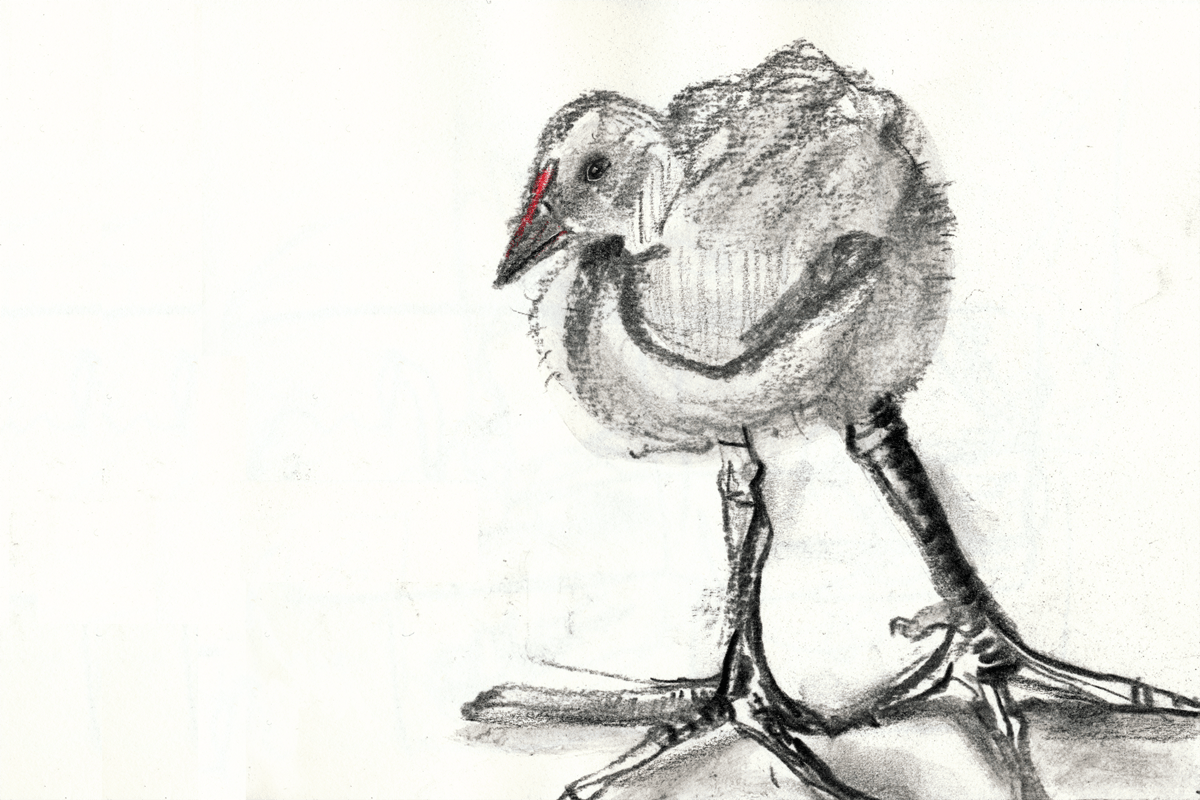
My Myna, Maree Woolley
Big Foot, Maree Woolley

Next week, Enderby Studio Art Program will host guest artist, Maree Woolley. Maree has worked as a freelance illustrator and animator on numerous award-winning multimedia titles for broadcasters and multimedia production houses. 

Maree has a love of drawing. Her drawings are evocative notations of everyday objects and zoo animals. They are economical and skillful, often containing subtle, delightful narratives.

You can see more work at:

http://www.redbubble.com/people/woolleyworld
http://www.behance.net/woolleyworld

David Palliser moves to Block Projects

Solar Headache, 2012 137 cm. x 105 cm., Oil on canvas
Solar Headache, 2012, 137 cm. x 105 cm., Oil on canvas

ESAP guest artist David Palliser has moved to Block Projects gallery in Richmond.